Why Festivals Choose Certain Films: What I Learned at B3
Updated: Aug 21, 2025
As independent filmmakers, we often submit projects to festivals, hoping for that one break. Yet, most of us face rejection, and the reasons aren’t always clear.
You may have heard feedback like:
“The quality is fine, but didn’t we have this kind of film decades ago?”
“It’s a good film, but I don’t feel it reflects my life struggles.”
“I don’t think it deserves the award.”
It’s easy to blame the jury for overlooking “truly innovative” work. For years, I also saw festival selection as a mysterious process — until I attended a small panel at the B3 Festival in Frankfurt. There, Anna Schoeppe, Managing Director at Hessen Film & Media, spoke candidly about how projects are chosen for funding.
Her explanation didn’t just clear up the mystery. It also made me rethink my own strategy as a filmmaker.
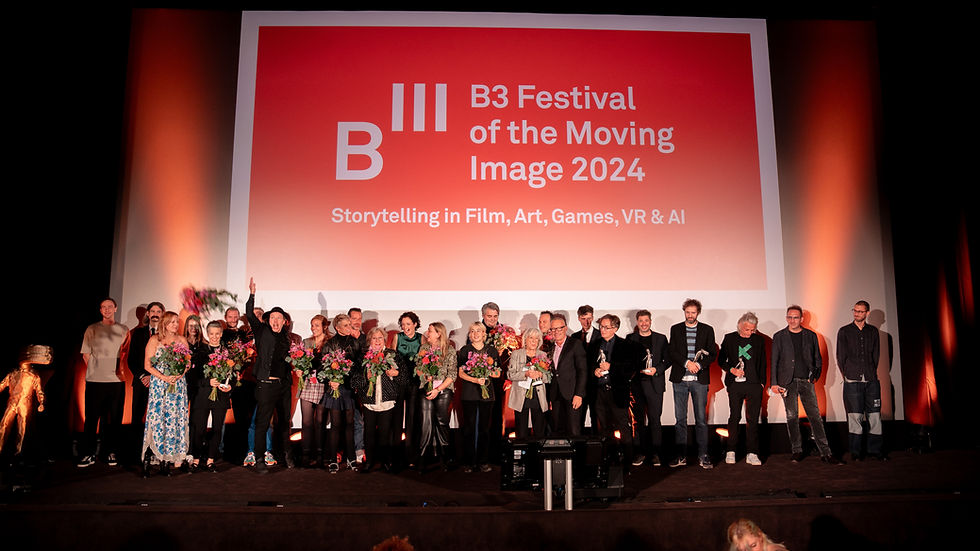
How Do Festival Organizers Decide?
They back projects that wouldn’t survive without them.
Funding goes to work that genuinely needs their support — the kind that won’t get made otherwise.
There has to be a genuine connection.
Like a relationship, it works best when there’s chemistry between the festival’s mission and your project. Without it, both sides risk losing out.
Consensus matters.
All jury members must agree on the final selection, which means compromises are inevitable.
Risk has to be balanced.
Festivals can’t fill their entire lineup with risky, unknown projects. They often mix safe bets — such as films already selected by Cannes or Berlinale — with smaller, niche works.
Survival shapes taste.
To keep public funding, festival directors need to show results: a track record of films that perform well internationally. Recognizable titles from big festivals help justify their existence to funders.
Hearing this, I understood why festivals sometimes pass on strong, original work. It’s not necessarily about quality — it’s about keeping the institution alive.
My Takeaway
The conversation made me see festival programmers less as gatekeepers and more as people under constant pressure to balance art, risk, and survival. The resigned looks on the panelists’ faces said it all: they care, but they have limits.
For me, the biggest lesson was this:
If I want to create something truly unique and personal, I can’t rely too heavily on festival funding.
These programs, by necessity, often select safer work that fits a narrower taste profile. That’s understandable — but it also means the most daring, author-driven films might need to be made outside that system.
So while I still value festival support and will apply where it makes sense, I’m no longer letting their calendars or approval dictate my creative timeline.
Embracing Creative Freedom
As I reflect on my journey, I realize the importance of creative freedom. It’s essential to explore ideas that resonate deeply with me. This exploration can lead to unique storytelling that stands apart in a crowded field.
When I think about my own projects, I often find inspiration in the unexpected. Sometimes, the most profound stories come from personal experiences. They emerge from moments of vulnerability and honesty.
I believe that every filmmaker has a unique voice. It’s crucial to nurture that voice, even if it means stepping outside the traditional festival circuit.
The Power of Collaboration
Collaboration is another vital aspect of filmmaking. Working with others can spark new ideas and perspectives. I’ve found that engaging with diverse artists enriches my work.
Whether it’s through dance, performance, or visual storytelling, collaboration opens doors. It allows us to blend different art forms, creating something truly special.
I encourage fellow filmmakers to seek out partnerships. Embrace the beauty of working together. It can lead to innovative projects that might not fit within the confines of festival expectations.
Looking Ahead
As I move forward in my career, I’m excited about the possibilities. I aim to expand my creative collaborations and develop my own feature projects. Gaining recognition for my distinctive artistic voice is a goal I hold dear.
I believe that by staying true to myself and my vision, I can create work that resonates with audiences. It’s about finding that balance between artistic integrity and the realities of the industry.
At last, I want to send my love and appreciation to the panelists at B3 Festival. Thank you for the honest and intimate discussions — they gave me more than just insight; they gave me clarity about where I stand as a filmmaker.
Written November 2024.
Comments